- Mon - Sat: 9.00 AM - 7.00 PM


Pocket Filters vs. Bag Filters: Key Differences, Benefits & How to Choose
In HVAC and air filtration systems, choosing the right filter is critical for performance, air quality, and cost-efficiency. Yet many facility managers and engineers confuse pocket filters with bag filters. While they sound similar, they differ greatly in construction, durability, applications, and cost-effectiveness.
Making the wrong choice can result in collapsed filters, increased energy costs, and frequent maintenance. In this guide, we’ll break down the differences between pocket filters and bag filters, highlight their pros and cons, and provide a clear framework to help you select the right filter for your system.
What Is a Bag Filter?
A bag filter is a type of air filter made from soft pockets (bags) attached to a metal frame (galvanized steel or aluminum). These filters typically come with MERV ratings between 8–14, suitable for commercial and industrial HVAC systems.
Advantages of Bag Filters:
- Wide availability and cost-effective.
- Good dust collection efficiency.
- Suitable for general-purpose HVAC systems.
Disadvantages of Bag Filters:
- Soft pockets may collapse under high airflow, reducing efficiency.
- Metal frames are prone to corrosion in humid or chemical-heavy environments.
- Potential risk of air leakage at seams.
- Require frequent maintenance compared to rigid filters.
Pocket Filter Industry in India
When it comes to sourcing high-quality pocket filters, India is home to a large network of manufacturers, suppliers, exporters, traders, dealers, and retailers. These companies play a crucial role in supporting HVAC systems and pollution control devices & machines across industrial and commercial sectors.
Leading manufacturing companies and producers in India ensure that pocket filters are designed to meet international standards of efficiency, durability, and air quality management. From industrial units to cleanroom environments, Indian pocket filter manufacturers are catering to both domestic and global markets through exporters and distributors.
What Is a Pocket Filter (Rigid)?
A pocket filter, often called a rigid pocket filter, uses synthetic filter media supported by a rigid plastic or non-corrosive frame. This design ensures that the filter maintains its shape even under high airflow conditions.
Advantages of Pocket Filters:
- Rigid design resists collapse.
- Non-corrosive construction withstands humidity and chemicals.
- High dust-holding capacity for longer service life.
- Lower maintenance and better performance stability.
Typical MERV Range: 8–11
While slightly more expensive than bag filters, their durability and longevity often make them more cost-effective over time.
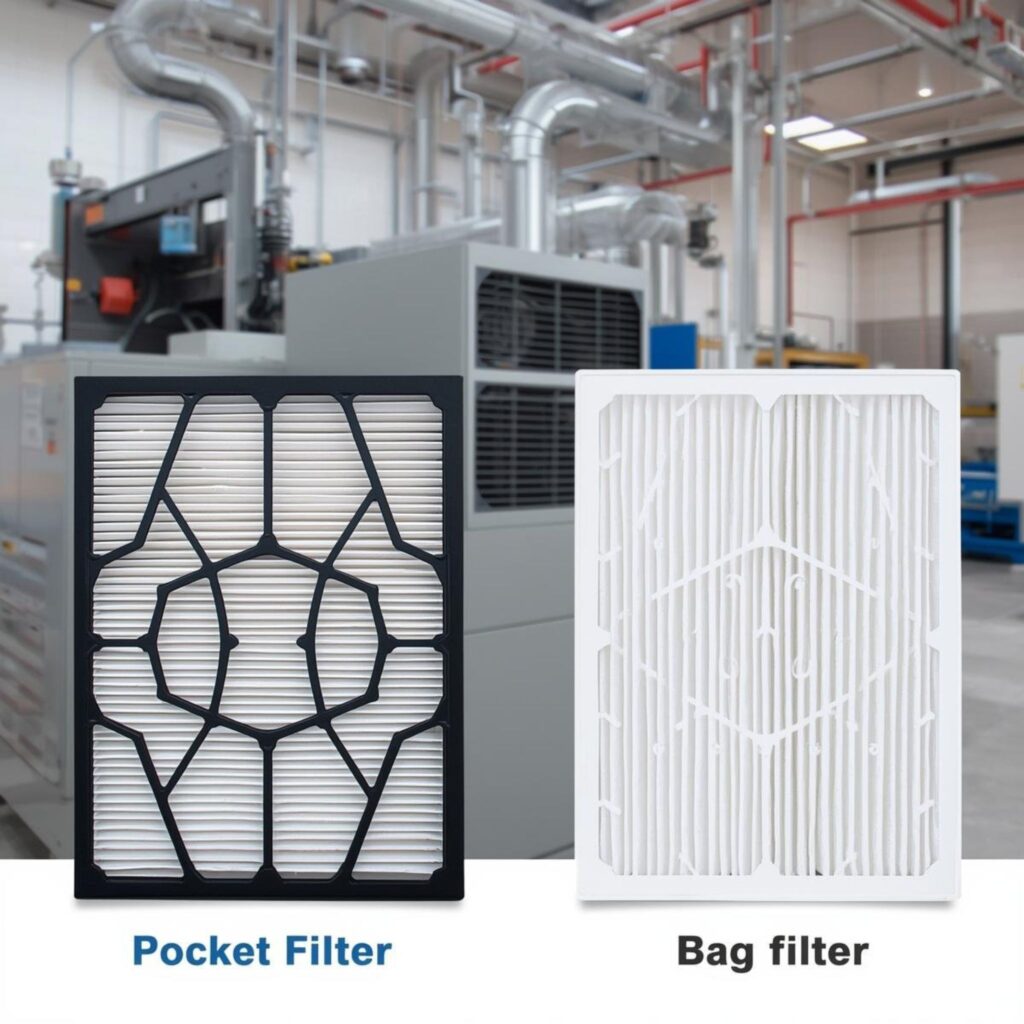
Side-by-Side Comparison: Pocket vs. Bag Filters
Feature | Bag Filters | Pocket (Rigid) Filters |
Frame Material | Metal (may corrode) | Plastic / non-corrosive |
Pocket Rigidity | Soft – risk of collapse | Rigid – maintains shape |
Dust-Holding Capacity | Moderate | High |
Maintenance Frequency | Higher | Lower |
Resistance to Humidity | Poor | Excellent |
Lifespan | Shorter | Longer |
Best Use Cases | General HVAC systems, offices | Cleanrooms, hospitals, industrial sites |
Applications & Best Use Cases
When to Choose Bag Filters
- Commercial buildings and office HVAC systems.
- Facilities with moderate dust load and airflow.
- Environments with low humidity and limited chemical exposure.
- When upfront cost is a priority.
When to Choose Pocket Filters
- Hospitals, laboratories, and cleanrooms needing stable airflow.
- Industrial environments with high dust load.
- Systems exposed to humidity or corrosive elements.
- Facilities seeking longer service intervals and lower lifecycle cost.
Efficiency, Cost & Maintenance Considerations
While bag filters are cheaper initially, their shorter lifespan and higher maintenance needs often make them more costly in the long run.
Pocket filters, though slightly more expensive, offer:
- Higher dust capacity, reducing replacement frequency.
- Energy efficiency, thanks to stable airflow and reduced collapse risk.
- Lower total cost of ownership by cutting labor and downtime.
How to Decide What’s Right for Your System
When choosing between pocket and bag filters, consider the following:
- Airflow conditions: High airflow favors rigid pocket filters.
- Environmental factors: Humid or chemical-prone areas require pocket filters.
- Budget constraints: Bag filters are better for low upfront costs.
- Maintenance cycles: Pocket filters reduce downtime and replacement frequency.
Quick Decision Guide
- Need cost savings upfront? → Bag Filter
- Need durability under tough conditions? → Pocket Filter
- Concerned about corrosion and humidity? → Pocket Filter
- Moderate environment, average performance needed? → Bag Filter
Conclusion
Both bag filters and pocket filters play essential roles in HVAC and industrial systems. The choice depends on your environment, airflow, and cost priorities.
- Bag filters are cost-effective for general HVAC use.
- Pocket filters provide superior durability, dust-holding capacity, and long-term savings in demanding conditions.
FAQs
Q1. Are pocket filters and bag filters the same?
No. Pocket filters are rigid and more durable, while bag filters are soft and prone to collapse.
Q2. Which filter lasts longer?
Pocket filters generally last longer due to higher dust-holding capacity and non-corrosive materials.
Q3. Can bag filters handle humid environments?
Not effectively. Metal frames may corrode and filter media may collapse.
Q4. Which is more cost-effective in the long run?
Pocket filters, as they reduce maintenance, energy usage, and replacement frequency.
Q5. Where are bag filters most commonly used?
In commercial HVAC systems like offices and retail spaces with moderate airflow.